
“The dessolated Lover and disappointed Connections, are compelled by their Grief to reflect on the vanity of human Wishes and Expectations; to learn the essential Lesson of Resignation; to review their own Conduct towards the deceased; to correct any Errors or faults in their future conduct towards their remaining friends and towards all Men; to recollect the Virtues of the lost Friend and resolve to imitate them; his Follies and Vices if he had and resolve to avoid them.”
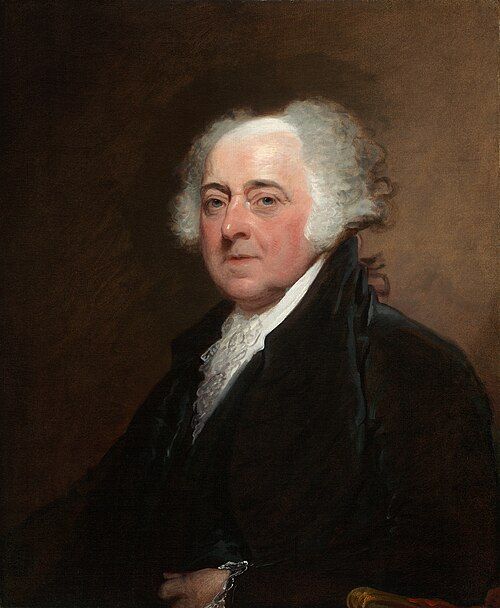
John Adams, 6 May 1816
06 May 1816
John Adams (age 80 in 1816):
- Living in retirement at his farm in Quincy, Massachusetts since 1801
- Had reconciled with Jefferson in 1812 after their bitter political estrangement following the 1800 election
- Still married to Abigail Adams, though she was also aging (she would die in October 1818)
- Increasingly frail but intellectually sharp, reflecting deeply on mortality and meaning
- Had witnessed the deaths of many contemporaries and was acutely aware of his own advancing age
Thomas Jefferson (age 73 in 1816):
- Living at Monticello, having left the presidency in 1809
- Financially struggling due to debts and the economic effects of the War of 1812 on Virginia agriculture
- Founding the University of Virginia (chartered in 1819)
- Recently widowed (Martha had died in 1782), and had lost several children and close friends
- As he wrote in this very letter: "I steer my bark with Hope in the head, leaving Fear astern" Founders Online: Thomas Jefferson to John Adams, 8 April 1816 - maintaining optimism despite personal losses
The State of the Nation in 1816
Post-War Recovery: The United States was recovering from the War of 1812 (1812-1815), which had ended with the Treaty of Ghent in December 1814. The war had brought economic hardship, particularly to Jefferson's Virginia, where British naval blockades had devastated tobacco exports.
Political Landscape:
- James Madison was president (1809-1817)
- The Federalist Party was essentially dead after opposing the War of 1812
- This was the beginning of the "Era of Good Feelings" under the Democratic-Republican Party's dominance
- Both Adams and Jefferson, despite their past political differences, were now elder statesmen observing from retirement
Economic and Social Changes:
- The country was experiencing early industrialization, particularly in New England
- Westward expansion was accelerating
- The slavery question was becoming more contentious (Missouri Compromise would come in 1820)
- Both men were witnessing America's transformation from their revolutionary ideals into a more complex, modern nation
Jefferson had written to Adams on April 8th asking "for what good End the Sensations of Grief could be intended" and wishing "the Pathologists would tell Us, what the Use of Grief, in our Œconomy, and of what good it is the Cause proximate or remote."
Jefferson wrote: "my hopes indeed sometimes fail; but not oftener than the forebodings of the gloomy. there are, I acknolege, even in the happiest life, some terrible convulsions, heavy set-offs against the opposite page of the account. I have often wondered for what good end the sensations of Grief could be intended. all our other passions, within proper bounds, have an useful object. and the perfection of the moral character is, not in a Stoical apathy, so hypocritically vaunted, and so untruly too, because impossible, but in a just equilibrium of all the passions. I wish the pathologists then would tell us what is the use of grief in the economy, and of what good it is the cause, proximate or remote.”
The passage comes within Adams' broader argument that grief serves essential moral and psychological functions. He uses analogies - comparing himself to "one of those little Eels in Vinaigre, or one of those Animalcules in black or red Peper or in the Horse radish Root, that bite our Tongues So cruelly, reasoning upon the το παν [the universe]" - to acknowledge human limitations in understanding life's larger purposes.
Adams argues that "Grief drives Men into habits of Serious Reflection Sharpens the Understanding and softens the heart; it compells them to arrouse their Reason, to assert its Empire over their Passions" and ultimately "to make them Stoicks and Christians."

Sources


